
For Bihar, trade with China through the rail link will be easier along this route than through Kolkata, saving time, cost and distance
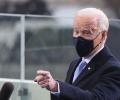
Chinese Foreign Ministry spokesperson Hua Chunying, known for fiery retorts against the US, welcomed Biden's first moves to join the Paris Climate Accord and the World Health Organisation (WHO) which was trashed by Trump as a puppet of China over its conduct to deal with the COVID-19.

'It is no accident that politicians strive to control sports bodies, and get their names associated with popular sports, sometimes by renaming stadiums after themselves,' observes Devangshu Datta.

Meet Sabriye Tenberken, a German woman who is changing lives in India.
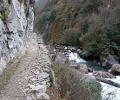
'It is certainly time for New Delhi to open up. Not only should it go ahead at full steam with the roads to the LAC, but the government must also allow tourists to visit these stunningly beautiful areas of Indian territory.'

A release from White House said Obama held in-depth, productive and candid discussions on the US-China relations and other issues of mutual interest.

We can make a beginning by openly acknowledging the Russian help in 1971 victory when President Putin visits India on 6 December 2021. Showing gratitude to a friend is part of our DNA, notes Colonel Anil A Athale (retd).

The government must figure out what the Chinese game plan is and thwart the endgame before it is upon us, possibly in early winter, advises David Devadas.
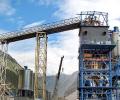
India will pay China over Rs 82 lakh annually for crucial flood data of the Brahmaputra to improve flood forecasting even as the two sides agreed to allow their water experts to conduct study tours on both sides of the river which originates in Tibet.

The time is ripe to extend the confrontation with the Chinese to the maritime domain, says former RA&W officer Krishan Varma.

'If one puts the context of what Xi Jinping said at the UN about not wanting a 'hot or cold war with any country', one realises that his speech was quite bizarre.' 'The world does not expect such statements from China, a nation aspiring to be a superpower.
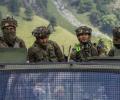
Today, the Ladakhis and Tibetans have been joined by the Sikhs, the Madrassis, the Garhwalis, the Rajputs, who are well trained psychologically and otherwise, to defend the nation, observes Claude Arpi.

'We are facing the most critical military situation with China in the last 50 years.'
It is learnt that the India's top military brass is constantly monitoring the evolving situation even as the United States said the aggressive behaviour by Chinese troops was a reminder of the threat posed by China.

Through the past 18-month period, peace has prevailed in the disputed border regions, which was immensely helpful in the difficult situation that the country was passing through, observes Ambassador M K Bhadrakumar.

Patrick Hickey, president of the European Olympic Committees, told the South China Morning Post that the games' governing body could amend its rules so that host nations don't have to take the torch across borders and expose it to security breaches
'If we had sent a few airplanes (into Tibet), we could have wiped the Chinese out.' 'And everything could have been different in the 1962 War.' 'They did not believe me there was no Chinese air force.' 'Can you imagine what would have happened if we had used the IAF at that time?' 'The Chinese would have never dared do anything down the line.'

India and China have so far held 19 rounds of talks to resolve the boundary dispute.
Foreign Secretary Shivshankar Menon arrived in Beijing on Sunday to attend a meeting of G-8 'outreach countries', becoming the first top Indian diplomat to visit China since the outbreak of the Tibet unrest. The G-5 meeting in Bejing is a multilateral consultation exercise on economic and trade issues and climate change, among others, that major developing nations wish to take up with G-8. Menon is expected to meet Chinese officials and discuss the of bilateral issues.
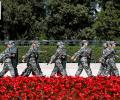
China on Friday hiked its defence budget to $209 billion, maintaining a single-digit growth for the sixth consecutive year with a 6.8 per cent increase in 2021.

'What needs to be watched is that the border incidents at Dokalam in 2017 and Galwan in 2020 are triggering nascent Chinese nationalism against India,' asserts Srikanth Kondapalli, the leading China expert.

Though General Naravane's visit will not deal with 'impermanent' issues like the changing stands of politicians, it will certainly reinforce the deeper 'permanent' links between the people of Nepal and India. Time will hopefully tackle the present impermanence of the Sino-Nepalese romance, notes Claude Arpi.

'Even if there is no full-scale war, Galwan-like skirmishes cannot be ruled out.'

Just like China wants Trump to lose the US presidential poll, it may want Modi to lose the Lok Sabha polls. So months before the 2024 elections, China may take possession of an important area, say one of the Char Dhams, warns Sanjeev Nayyar.

;The world paid a heavy price for the megalomania of the Third Reich's fuehrer.' 'Will it pay a similar price for the ambitions of China's leader-for-life?' asks Amulya Ganguli.
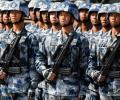
With the Indian Army having blocked the PLA several kilometres inside India, hundreds of soldiers from both sides remain in a tense face-off.
Claude Arpi looks at the issues that challenge Sino-Indian relations.

Did Vinod Sehgal die in Tsangdgar or was he taken PoW to Tibet or China? Why has the IAF kept so quiet for all these years, asks Claude Arpi.

The threat of landslides and mudslides remains high in the earthquake-hit Nepal in the coming weeks, and the risk is likely to increase when the monsoon rains arrive this summer, scientists have warned.

'Today the Chinese think they can slap India, and there will be no consequences.' 'They must be made to feel the consequences through any and all means,' says Rajeev Srinivasan.

The coronavirus outbreak began in Wuhan, capital of China's Hubei province, in December and has now spread across the globe. The Chinese authorities are trying to contain the epidemic while other countries, including India, are working on plans to evacuate their citizens from Wuhan and other cities in Hubei province, the epicentre of the outbreak.

"CCP's (Chinese Communist Party) territorial aggression is also apparent on its Indian border where China has attempted to seize control of the Line of Actual Control by force," US National Security Advisor Robert O'Brien said in a remark on China early this week in Utah.
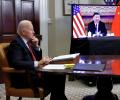
The highly-anticipated summit, which began early Tuesday, is the third engagement between Xi, 68, and Biden, 78, since February.

Claude Arpi gives a fascinating firsthand account of the Dalai Lama's arrival in Tawang in March 1959 and explains why he will once again receive a grand welcome, whether Beijing likes it or not.

'They know that India is no pushover.' 'We have to be extremely vigilant, remain ready and keep strengthening our positions.' 'We have to be militarily strong, whatever be the cost.'

Four Chinese soldiers were killed in the fierce clash with the Indian Army in the Galwan Valley in eastern Ladakh in June last year, the People's Liberation Army (PLA) acknowledged for the first time on Friday.

'Does it mean that we are witnessing the end of an era?' 'Probably not, but the post-Trump trade war has certainly brought a lot of instability in China,' notes Claude Arpi.
The US hopes that the differences will be resolved peacefully, officials said in Washington.

52 world leaders, including Narendra Modi, will attend this week's Nuclear Security Summit in Washington, DC. Obama will meet separately only with the Chinese president.
